
The National Football League (NFL) has witnessed a significant transformation in how teams approach game strategy, player evaluation, and roster construction with the integration of advanced analytics. As we enter the 2026 season, NFL teams are increasingly relying on data-driven insights to gain a competitive edge. The question on everyone’s mind is: how do NFL teams use advanced analytics?
Advanced analytics in the NFL encompasses a broad range of statistical models and data analysis techniques that help teams make informed decisions. These analytics include metrics such as Expected Points Added (EPA), Defense-adjusted Value Over Replacement (DVOA), and various other proprietary models developed by teams. The use of advanced analytics has become a critical component of NFL team operations, influencing everything from in-game decision-making to long-term roster planning.
Player Evaluation Through Advanced Metrics
NFL teams are using advanced analytics to evaluate player performance beyond traditional statistics. Metrics such as EPA per play and DVOA provide a more nuanced understanding of a player’s contribution to their team’s success. For instance, a quarterback’s EPA per dropback can reveal their ability to make plays under pressure, while a running back’s yards after contact can indicate their effectiveness in breaking tackles.
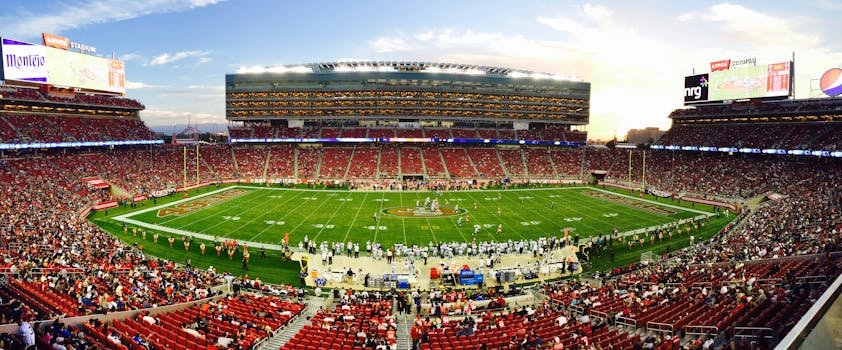
These advanced metrics allow teams to identify undervalued players and make more informed decisions during the draft and free agency. By analyzing data from previous seasons, teams can also predict how players are likely to perform in different situations, such as in critical third-down conversions or against specific defensive schemes. For example, the Kansas City Chiefs used advanced analytics to identify and draft Patrick Mahomes, who has since become a key player for the team.
The use of advanced analytics in player evaluation also extends to assessing player injuries and predicting their impact on future performance. Teams can analyze data on injury history, player workload, and recovery patterns to make more informed decisions about player management and roster construction. This helps teams to optimize player health and reduce the risk of injuries.
Game Planning with Data-Driven Insights
Advanced analytics play a crucial role in NFL game planning, enabling teams to develop strategies tailored to their opponents’ strengths and weaknesses. By analyzing opponents’ tendencies, such as their passing patterns or defensive alignments, teams can identify areas to exploit and develop game plans accordingly.
Teams use data to analyze their opponents’ performance in various situations, such as on third downs, in the red zone, or against specific personnel groupings. This information helps coaches make informed decisions about play-calling and game strategy. For example, if a team discovers that their opponent struggles against a particular formation, they can design their game plan to feature that formation frequently.
Teams also use advanced analytics to anticipate their opponents’ adjustments and develop counter-strategies. By analyzing game footage and statistical data, teams can identify patterns in their opponents’ behavior and prepare accordingly. This allows teams to stay one step ahead of their opponents and gain a competitive edge.
In-Game Decision-Making: When to Go for It
One of the most significant impacts of advanced analytics on NFL game strategy is in-game decision-making. Teams are now using data-driven models to inform decisions such as whether to go for it on fourth down, when to attempt a two-point conversion, and how to manage the clock in close games.
- Fourth-Down Decisions: Advanced analytics have shown that teams often underutilize their fourth-down opportunities. Data models can calculate the expected outcome of going for it versus punting, taking into account factors such as field position, down, and distance.
- Two-Point Conversions: Teams can use historical data to determine the optimal strategy for two-point conversions based on the game situation and their opponent’s defensive tendencies.
- Clock Management: Advanced analytics can help teams make optimal decisions about when to challenge plays, how to manage timeouts, and when to hurry or slow down the pace of play.
- Play-Calling: Teams can use data to inform their play-calling decisions, such as whether to pass or run in a given situation.
- Defensive Adjustments: Advanced analytics can help teams identify their opponents’ strengths and weaknesses, allowing them to make targeted defensive adjustments.
The use of advanced analytics in in-game decision-making has become increasingly prevalent, with many teams relying on data-driven insights to inform their decisions. This has led to more aggressive and strategic decision-making, which can often be the difference between winning and losing.
Comparing Team Approaches to Advanced Analytics
| Team | Analytics Department Size | Primary Analytics Focus | Notable Analytics-Driven Decisions |
|---|---|---|---|
| New England Patriots | 15+ | In-game decision-making | Aggressive fourth-down attempts |
| Philadelphia Eagles | 10-15 | Player evaluation | Drafting undervalued players |
| Los Angeles Rams | 10-15 | Game planning | Exploiting opponent weaknesses |
| San Francisco 49ers | 15+ | Player health management | Optimizing player workload |
| Kansas City Chiefs | 5-10 | Offensive play-calling | Increasing tempo and pace |
The table highlights the varying approaches teams take to advanced analytics, with some focusing on in-game decision-making and others on player evaluation or game planning. By comparing these approaches, teams can identify best practices and areas for improvement.
The Impact of Advanced Analytics on Roster Construction
A study by the NFL Players Association found that teams that heavily incorporate advanced analytics into their roster construction process tend to have more successful drafts and free agency signings. The data suggests that these teams are better at identifying undervalued players and making informed decisions about player contracts.
For example, the study found that teams using advanced analytics were more likely to draft players who exceeded their draft position’s average performance. This is because analytics can help teams identify players with specific skill sets that are likely to translate to the NFL. By using advanced analytics, teams can make more informed decisions about player personnel and build a more competitive roster.
Moreover, advanced analytics can help teams make more informed decisions about player contracts and salary cap management. By analyzing data on player performance and market trends, teams can determine fair market value for players and avoid overpaying for talent. This can help teams to manage their salary cap more effectively and build a more sustainable roster.
Challenges and Limitations of Advanced Analytics in the NFL
While advanced analytics have revolutionized NFL game strategy, there are still challenges and limitations to their adoption. One of the primary challenges is the need for high-quality data and sophisticated analytical models. Teams must invest significant resources in data collection and analysis to gain a competitive edge.
Another challenge is the need for coaches and front office personnel to trust and understand the insights provided by advanced analytics. This requires a cultural shift within organizations, as well as education and training for key decision-makers. Teams must be willing to adapt to new ways of thinking and decision-making.
Finally, the NFL’s competitive balance and salary cap constraints can limit the extent to which teams can implement analytics-driven strategies. Teams with more resources may have an advantage in terms of analytics capabilities, but smaller-market teams can still compete by being more efficient with their resources.
Conclusion
The integration of advanced analytics into NFL game strategy has transformed the way teams approach player evaluation, game planning, and in-game decision-making. As we look ahead to the 2026 season, it is clear that teams that effectively use data-driven insights will have a significant competitive advantage.
By understanding how NFL teams use advanced analytics, fans can gain a deeper appreciation for the strategic complexities of the game. As the NFL continues to evolve, we can expect to see even more sophisticated applications of advanced analytics. Teams will need to stay at the forefront of analytical techniques and data collection to remain competitive.
FAQs
What is Expected Points Added (EPA) in NFL analytics?
Expected Points Added (EPA) is a metric that measures the expected change in points for a given play. It takes into account factors such as down, distance, and field position to estimate the expected points before and after a play.
EPA provides a measure of a play’s success or failure, allowing teams to evaluate player and team performance more effectively.
How do NFL teams use advanced analytics for game planning?
NFL teams use advanced analytics to analyze opponents’ tendencies, strengths, and weaknesses. This includes studying their passing patterns, defensive alignments, and performance in various situations.
By analyzing this data, teams can develop targeted game plans and strategies to exploit their opponents’ weaknesses and gain a competitive edge.
Can advanced analytics predict player injuries in the NFL?
While advanced analytics cannot predict injuries with certainty, teams use data on injury history, player workload, and recovery patterns to assess injury risk.
This information helps teams make informed decisions about player management and roster construction, reducing the risk of injuries and optimizing player health.